The Custody Command Layer
Custody integration is quietly
taxing your growth.
The Custody Command Layer resolves it.
Your integration is built in, not bolted-on.

2 mins watch
See what fragmented custody is quietly costing your firm.
The Status Quo
Endless portals.
Endless logins.
Endless reconciliations.
Most custody integrations still need a human in the middle when the data doesn’t match. Your ops team became the middleware. That’s not why you started the firm.
The Custody Command Layer manages execution. It doesn’t just report on it.
Not just integrated.
Not bolted-on.
Built in.
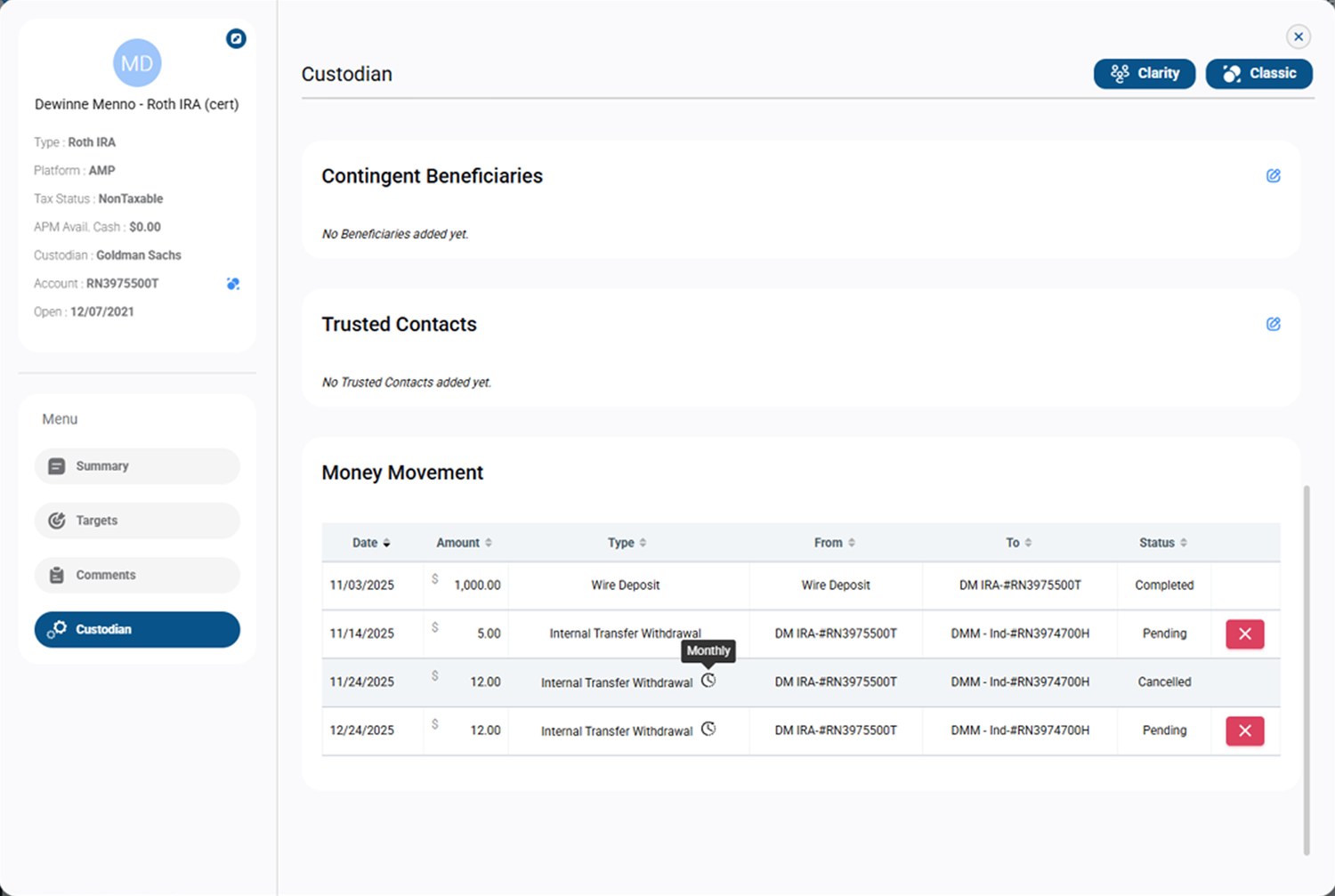
We built the Custody Command Layer so the operational drag of custody stops slowing your growth. Same-day accounts, real-time data, no reconciliation.
— Aaron Brodt, Co-Founder, Amplify
Read more about our first custodian integration in the press release.
Built on Connected Data
Connected data is what lets custody integration finally run as one system: onboarding, trading, maintenance, and real-time data. Not four handoffs your team babysits.
Client Onboarding
Same day account opening, built into Amplify’s digital onboarding. 90+% NIGO-free.
Simultaneous Trading
One instruction, executed across every account and custodian at once.
Maintenance in One Place
Address changes, beneficiaries, fee updates. One operating layer, not five portals.
Data Already Reconciled
Real-time custodial data, end-to-end, on one record. Nothing to true up on Monday morning.
Frictionless custody integration has arrived.
You’ve seen the layer. Now see the math.
Why it Compounds Growth
M&A Buyers don’t pay for size only. They pay for durable organic growth.
Connect-the-dots (the hidden tax, charged twice)
Fragmented custody integration taxes organic growth twice. Manual reconciliations, NIGO’s, and swivel chairs eat the capacity advisors and ops teams need to win and keep clients. And it degrades the experience that earns referrals. The Custody Command Layer removes both. Capacity goes back to clients. Experience becomes the reason they stay.
Capacity, redirected to growth.
Top-performing firms spend roughly 25% less time per client on operations and about 10% more on client service when work flows are automated and data is unified.
Experience that retains.
A real-time, consolidated client experience is what reduces attrition and drives referrals. Retention is organic growth’s quiet half.
How valuable?
One point of organic growth can add up to a full turn to your multiple. A firm growing 12% organically can command a multiple more than double a firm with none.
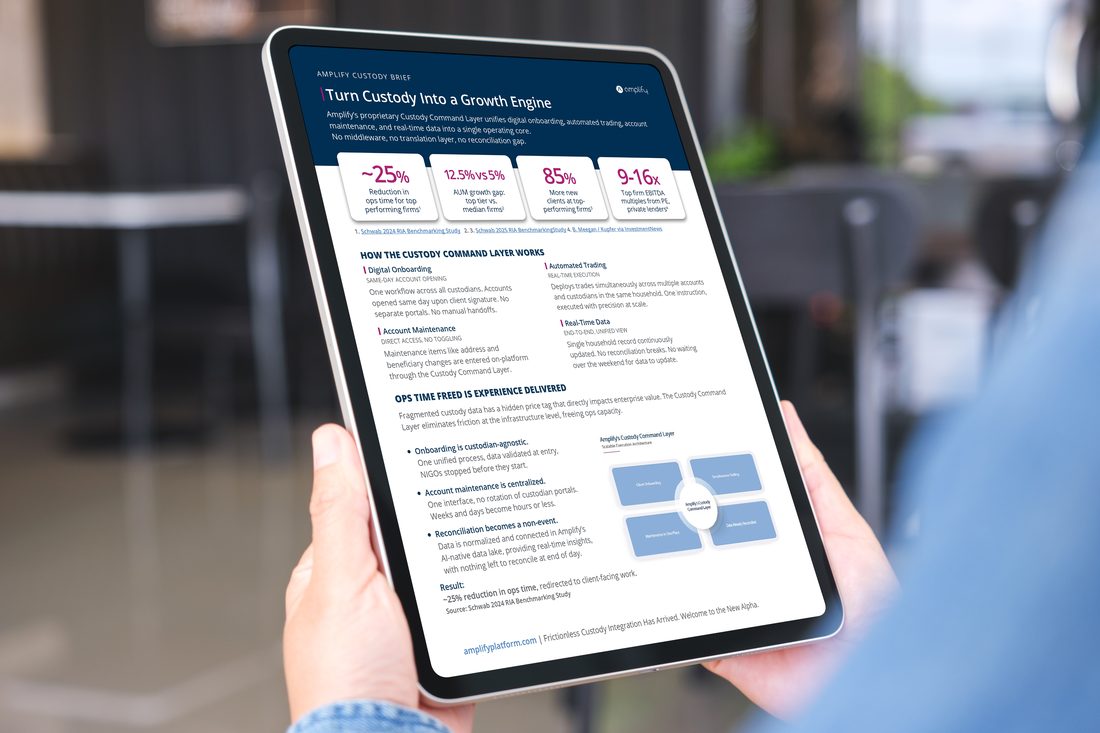
Connected custody won’t grow your firm by itself. But the friction it removes has been quietly taxing the one number acquirers pay the most for.
Get the Brief
See the full picture. What’s in the brief?
- The architecture,
- The benchmarks behind the numbers, and
- What access to our first tenant custodian means for your firm.
Brief lands in your inbox instantly. We don’t share your data.